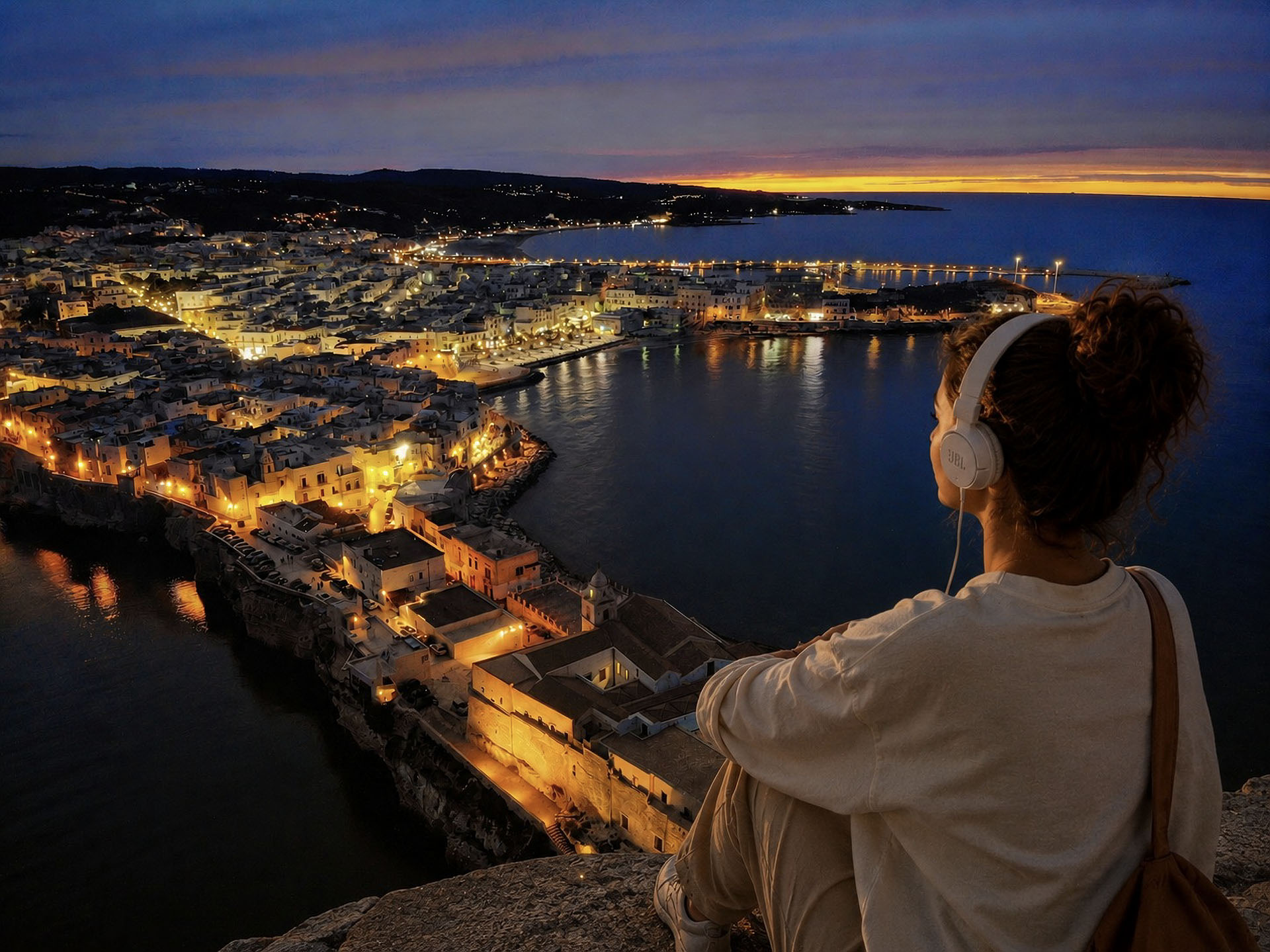
There’s a gesture that captures how travel has changed: you reach a square, raise your phone, take the photo, move on. For years that was the normal way to “see” a place. Today, more and more people pause a moment longer — and ask themselves what they’re actually looking at.
This isn’t a niche fad. It’s a shift that industry research has been recording for a couple of years now. It’s worth talking about not to announce that “fast tourism is dead” — it isn’t — but to understand what travelers are looking for today, and why.
What the numbers say
The direction is the same across surveys that have nothing to do with one another.
In Booking.com’s 2025 research — 32,000 people across 34 countries — 77% say they look for “authentic experiences representative of the local culture,” and 73% want the money they spend to go back to the local community. Not “see more”: understand, and leave something behind.
American Express Travel’s 2025 report finds that 83% of Millennial and Gen Z travelers prefer “unique, authentic experiences” over the most popular attractions. Expedia, surveying 25,000 people in 19 countries, reports that 63% are willing to pick a detour destination — a smaller place next to a famous hub — precisely to escape the crowds and find something more real.
And here’s the figure that ties it together: according to Euromonitor, 48.3% of global consumers (out of more than 40,000 surveyed) prefer to spend on experiences rather than things. People may travel less often, but to bring home something that doesn’t fit in a suitcase.
Why it’s happening
The flip side is plain to see. Since 25 April 2024, Venice became the first city in the world to charge day-trippers an entry fee. In the summer of 2024, in Spain, tens of thousands took to the streets against overtourism; Barcelona announced it will phase out all 10,101 short-term tourist rental licenses by 2028.
These are reactions to a kind of tourism that consumes places without understanding them. And when a way of traveling starts to wear out the places it claims to love, people — not all of them, but more and more — look for another way.
Understand, don’t pass through
This is the point, and it isn’t “go slow.”
A cruise passenger with four hours in Bari can’t go slow. But they can choose: to pass through the old town as a backdrop for photos, or to understand why those alleys are the way they are, why people put their tables out in the street, why there’s a saint who came from far away that the city feels is its own. The difference isn’t time. It’s attention.
The fast tourist arrives, photographs, leaves — and goes home with a camera roll. The one who wants to understand reads, listens, asks, and goes home with something more: the sense of the place, and of the people who live there.
Understand a place, don’t just pass through it.
And where does Localis fit?
Localis was born exactly here, a few years before these numbers became headlines: stories of the place, written and documented by people who live in Puglia, to understand where you are instead of just passing through it. Not a list of stops: a story, with a reason.
We’re not writing this to sell you a guide. We’re writing it because the shift that Booking, Expedia and Euromonitor are measuring is the same one that got us started: people don’t just want to see Puglia. They want to understand it.
Frequently asked questions
Is “hit-and-run” tourism over?
No, and it probably won’t be. But alongside it, a different demand has grown: travelers who want to understand places, not just tick them off a list. Industry surveys (Booking.com, Expedia, American Express) have been recording it for a couple of years.
Is Localis “slow travel”?
No. “Slow travel” is a trend, and it’s about pace: going slow, staying longer. We’re talking about something else, something that doesn’t go out of fashion — understanding a place instead of passing through it, which works even if you only have two hours. The point isn’t slowness, it’s meaning.
What are travelers looking for today, in one sentence?
Authenticity and connection with the place: experiences tied to local culture, spending that stays in the community, and the wish to go home having understood something, not just photographed it.
How do you “understand” a place you only visit for a few hours?
By arriving prepared and giving context to what’s in front of you: the history, the reason behind things, the voices of those who live there. A good story of the place — read beforehand, or heard on the spot — changes what you see, even in a short time.
Sources and method
The figures cited link to their original sources in the text: Booking.com 2025, American Express Travel 2025, Expedia “Unpack ‘25”, Euromonitor (2025). For the anti-overtourism measures: Venice and the 2024 protests in Spain.
For how we write and verify Localis stories, see The Localis method and the Sources page.