The Sacred Mountain — Forest, Faith and Pilgrims
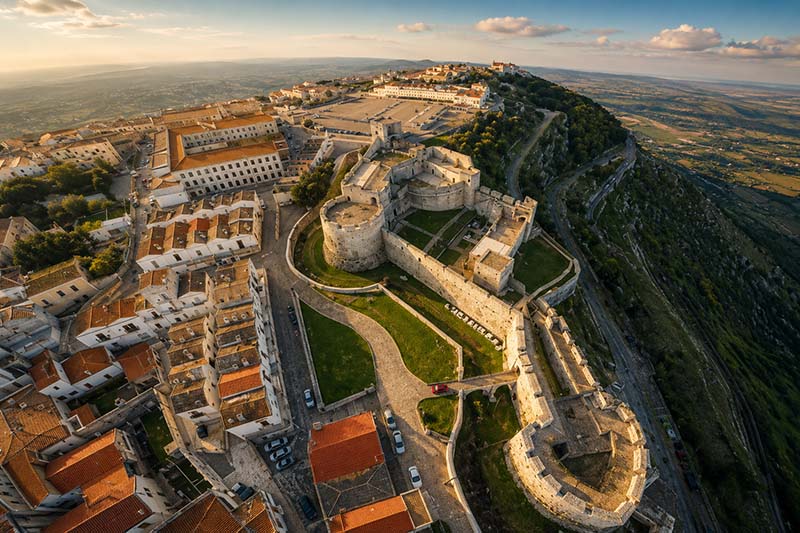
Foresta Umbra, Monte Sant'Angelo, San Giovanni Rotondo. Three places, one route medieval pilgrims knew well.
How to listen
Listen when you're ready to understand — in your room, on a train, or on location. Localis is not turn-by-turn navigation: it gives you context, history, and the perspective of someone who lives here, so you understand where you are.
- Runtime
- 19 min, 9 chapters
- Access
- After purchase, you receive an immediate link. Stream it or save it for offline listening before you begin.
- Languages
- Shown for each story
Guide facts
- Number of stops
- 9 audio stories
- Route
- Self-paced walking route
- Accessibility
- Historic center with mixed paving. Suitable for most visitors.
- What you need
- Headphones and a charged phone.
Chapters
- 01 Three places, one route 0:00
- 02 The Foresta Umbra: the preparation 0:52
- 03 The animals of the forest 1:58
- 04 Monte Sant'Angelo: the grotto 2:52
- 05 The pilgrims: who came and why 4:01
- 06 San Giovanni Rotondo: Padre Pio 5:03
- 07 Who was Padre Pio: beyond religious tourism 6:20
- 08 Monte Sant'Angelo and the Lombards 9:44
- 09 How to plan the route 11:59
The Sacred Mountain: the audio route to understanding the forest, the grotto and the convent
Not three separate destinations: a route that medieval pilgrims knew well and that still makes sense today.
Visiting sacred Gargano is easy. Understanding what you're doing there is something else.
Every year millions of pilgrims and tourists visit Monte Sant'Angelo — the grotto where the Archangel Michael appeared in 490 — and San Giovanni Rotondo, where Padre Pio lived and died. Almost no one passes through the Foresta Umbra first: eleven thousand hectares of primary forest where the trunks are two metres in diameter and sunlight never reaches the ground. Yet the medieval route connected all three.
Sacred Gargano is not a religious tourist circuit with three independent attractions. It is a system. The forest was the spiritual preparation — the entry into the archangel's territory. The grotto was the destination. Padre Pio's convent added a second layer of sacred meaning in the twentieth century. This audio story restores the logic of the route.
Nine chapters from forest to altar
What makes this story different from a traditional religious guide? The fact that it is not limited to devotion. You will discover the geological and botanical history of the Foresta Umbra — the oldest forest in Puglia, a relic of a forest that once covered the entire Po Valley. You will understand who the medieval pilgrims climbing to Monte Sant'Angelo were, where they came from and what they carried with them. And you will hear who Padre Pio really was before he became the second most famous saint in the world.
The route guides the listener through all three sites, with practical directions for those who want to follow the full route in a day. Twenty-four minutes, nine chapters — from the forest to the closing.
A voice built to accompany the journey
The pilgrim's voice accompanies the route through the Foresta Umbra, Monte Sant'Angelo and the Archangel's grotto — a perspective built to give depth to the places without imposing a religious interpretation. Narrative voice built on historical research and Localis sources.
The guide starts with the text: historical research, declared sources and Localis editorial responsibility. The audio is generated with ElevenLabs; technology gives voice to the listening experience, while writing and source selection remain ours.
Where the story starts
Suggested starting point. Open in Maps to get directions — then press play.